Online self-paced 6-week introductory course to sustainable and equitable solutions in urban mobility, and to the “living labs” model: a method of co-development among public and private actors, researchers, and civil society to accelerate innovation in climate action and sustainable urban planning and development. The course can be accessed via MITx: Transformative Living Labs in Urban Climate Action and Transportation Planning The course is offered by Massachusetts Institute of Technology (MIT) through the edX platform.

This paper uses simple analytical models to study high-income donor countries' willingness to pay to supply mitigation finance to low-income countries; how this depends on modality for finance supply; and how it changes as the global greenhouse gas mitigation agenda moves forward. The paper focuses on two modalities: transformational project-based mitigation finance (transitioning from fossil to non-fossil energy use at scale), and transformational policy-based mitigation finance support (implementing comprehensive carbon taxation). These modalities are compared with conventional finance for which donors have lower willingness to pay. High-income countries' willingness to pay is higher when mitigation is combined with carbon taxation;...

Tracking SDG7: The Energy Progress Report provides the international community with a global dashboard to register progress on the targets of Sustainable Development Goal 7 (SDG7): ensuring universal energy access, doubling progress on energy efficiency, substantially increasing the share of renewable energy, and enhance international cooperation to facilitate access to clean and renewable energy by 2030. It assesses the progress made by each country on these targets and provides a snapshot of how far we are from achieving SDG7. The report is a joint effort of the International Energy Agency (IEA), the International Renewable Energy Agency (IRENA), United Nations Statistics...

This video takes viewers through the tale of two fictional Caribbean countries: Sunland and Winland. Watch as planning, or a lack thereof, affects the outcome.

Keywords: climate change, climate adaptation, adaptation, vulnerability, National Adaptation Plan
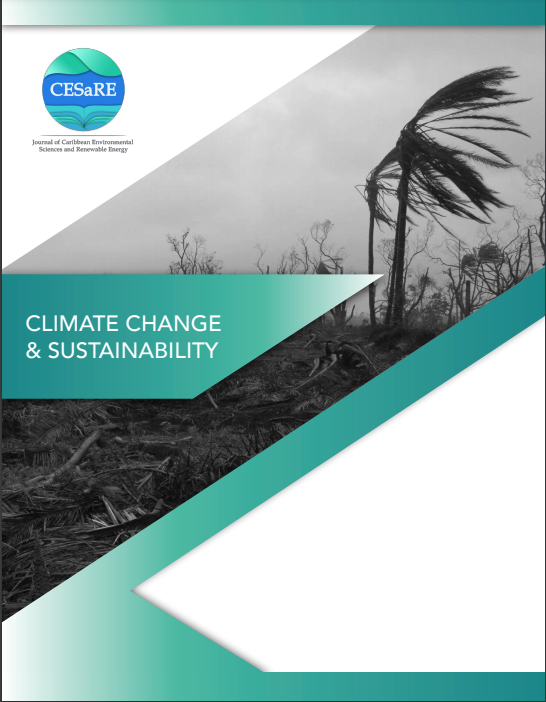

This book presents the results of more than a decade of work carried out by the Economic Commission for Latin America and the Caribbean (ECLAC) on the economics of climate change. It analyses the conclusive global data and the impact of climate change in the region, examining sectors such as agriculture, health, transport and energy. In particular, it addresses the effects of climate change on the two most vulnerable subregions, Central America and the Caribbean, and gives an account of the agreements reached in the region to tackle the problem of global warming. The book discusses the advances made in...
(1).png)
Caribbean SIDS are the least to contributors and are the most vulnerable to the impact of climate change. With limited natural resources and small economies of scale, the economic cost associated with climate change is estimated to be 15% of the combined GDP. With climate change and the Sustainable Developing Goals in mind, infrastructure systems have the ability to address these issues. Key Words: Climate mitigation, Sustainable Developing Goals, Small Island Developing States, SIDS,
The Caribbean Forum on Energy, Transport, and Resilience was held at the Bay Gardens Hotel, Rodney Bay, Saint Lucia, from June 26 to 27, 2019. It was hosted by the Organization of American States (OAS) and the Government of Saint Lucia, with support from the Organisation of Eastern Caribbean States (OECS) Commission. With the objective of exploring new technologies and combining them with existing regional experiences in sustainable urban development, the event had an overall goal to design a roadmap for the Caribbean smart cities of the future. The forum sought to further public-private exchanges among governments, energy and transportation...

This paper on sustainable bioenergy was drafted collectively by UN-Energy members, which include all of the United Nations(UN) agencies, programmes, and organizations working in the area of energy, reflecting their insights and expertise. it is intended to contribute to international discussions on the strategies and policies needed to ensure economic, sustainable, and equitable development of bioenergy in the years ahead. The paper points to key social, economic, and ecological; sustainability issues raised by the rapid development of bioenergy in both small and large-scale applications. It encompasses the entire bioenergy value chain, from production to use, with the goal of providing...

