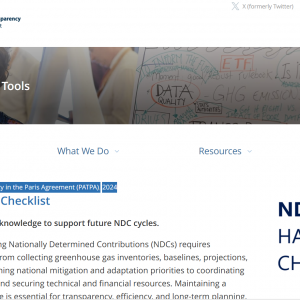
The NDC Handover Checklist is a practical tool that enables countries to prepare for the future NDC processes through recording all essential information of their recent NDC process. Read more here: NDC Handover Checklist
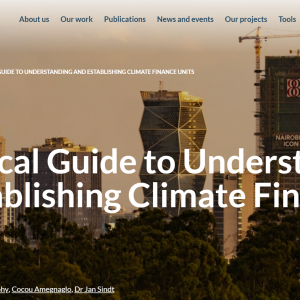
A policy brief with actionable insights for the development and effective implementation of Climate Finance Units within governments. Read more here: A Practical Guide to Understanding and Establishing Climate Finance Units
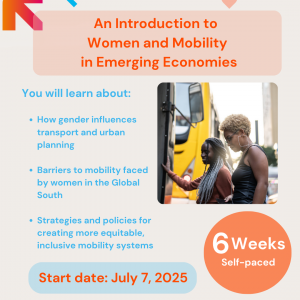
An Introduction to Women and Mobility in Emerging Economies, available from July 7. Across the globe, women encounter distinct mobility challenges that affect their access to education, healthcare, employment, and autonomy. These challenges are especially pronounced in emerging economies, where infrastructure and policy gaps often deepen gender disparities. This course provides a foundational understanding of the relationship between gender, mobility, and urban development in the Global South—and how inclusive, transformative transport policies can drive equity and sustainable progress. What you'll learn: Insights from international experts on gender and mobility Real-world case studies illustrating barriers faced by women in emerging economies...
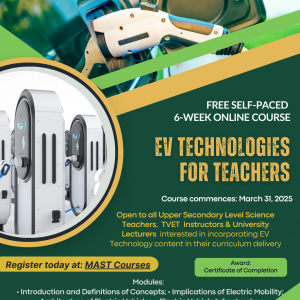
A 6-week self-paced online course: EV Technologies for Upper Secondary Level Science Teachers, TVET instructors and University Lecturers who wish to incorporate electric vehicle (EV) content in their programmes. More information can found Mona Academy of Science and Technology (MAST),. This course is offered by the University of the West Indies, Mona through the Mona Academy of Science and Technology (MAST). Click here to register: Mona Academy of Science and Technology Registration Form
A 6-week online, learn at your own pace course on electric vehicles and mobility and the socio-economic, environmental, politic and engineering issues which emerge. The course can be accessed via Electric Vehicles and Mobility The course is offered by the École des Ponts ParisTech through the Coursera platform.

A 6-week online course introducing lay-persons to major technological innovations underway in the mobility space, applying social science concepts to understand the social impacts of these technologies. The course can be accessed via People, Technology and the Future of Mobility The course is offered by the University of Michigan through the Coursera platform.
A 7-week, 7 module online course on language and narratives shaping views on mobility, transport policy and mobility innovation, using homo-economicus model. The course can be accessed via Alternative Mobility Narratives The course is offered by the University of Amsterdam through the Coursera platform.
Online 1-month self-paced course on the vulnerability of users and obtain an understanding of some of the main challenges and effective interventions for safe urban mobility. The course can be accessed via IDBx: Road safety in the Caribbean region: safe urban mobility The course is offered by the Inter-American Development Bank (IDB) through the edX platform.
Online self-paced 6-week introductory course to sustainable and equitable solutions in urban mobility, and to the “living labs” model: a method of co-development among public and private actors, researchers, and civil society to accelerate innovation in climate action and sustainable urban planning and development. The course can be accessed via MITx: Transformative Living Labs in Urban Climate Action and Transportation Planning The course is offered by Massachusetts Institute of Technology (MIT) through the edX platform.
Online 4-week self-paced course on decarbonization measures in the building and transport sectors. Learn about trends in energy usage, carbon intensity, and potential of available alternatives to limit greenhouse gas (GHG) emissions. The course can be accessed via DelftX: Designing Climate-Neutral Buildings and Transport The course is offered by Delft through the edX platform.

