
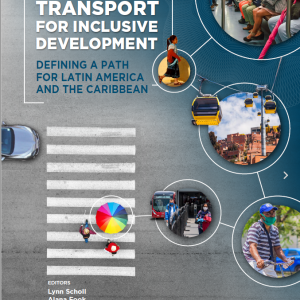
Transport for Inclusive Development: Defining a Path for Latin America and the Caribbean discusses the role that transport often plays in deepening social disadvantage and poverty, on the one hand, and its potential, on the other, to break the cycle of poverty and inequality through investments and policies that better consider the needs of poor and socially excluded groups. Keywords: Transport, Social Inclusion, Development, Latin America, Caribbean Click to download: Transport-for-Inclusive-Development-Defining-a-Path-for-Latin-America-and-the-Caribbean-1
Climate change, combined with recent geopolitical developments, has sent shockwaves throughout the global economy, magnifying concerns around energy security, food security and weather-related disasters. Small island developing states (SIDS), which are amongst the lowest emitters worldwide, are most at risk from these potential threats. However, they are increasingly employing ambitious plans to deploy renewable energy in order to secure its multiple benefits. This technical paper presents a quantification of SIDS’ renewable energy targets, both in their national energy plans and in their NDCs, comparing commitments made within their national policies and plans with those that extend to the Paris Agreement...

This report highlights the ongoing and previous work of the Agency to support countries through its various work packages, including those concerned with project development, financing and investment. Keywords: Antigua and Barbuda, Bahamas, Belize, St. Kitts and Nevis, Caribbean, Barbados, Granada, Guyana, Dominica, St. Lucia, St. Vincent and the Grenadines

Keywords: COVID-19, Mining resources, Natural resources, Energy, Biodiversity, Agriculture and rural development, Governance of natural resources, Water resources

Keywords: low carbon development, REDD+, climate change, greenhouse gases, GHG, carbon, clean energy


This report guides policy makers to stay on the the 1.5°C path to 2050, explores the socio-economic impacts of the transition and suggests ways to speed progress towards universal access to clean energy.

Stronger policies and raised climate goals leading into COP26 are driving renewables to new records, but faster deployment across all key sectors is needed to reach net zero. Key Words: Renewable, Climate Change, generate electricity

This video takes viewers through the tale of two fictional Caribbean countries: Sunland and Winland. Watch as planning, or a lack thereof, affects the outcome.

Remote work is more environmentally friendly than working in an office. Benefits include greenhouse gas reductions particularly in relation to commuter transport. Additionally, when employers offer remote work options, they experience a better reputation, boosted customer loyalty, and have happier, healthier employees. Key Word: work from home, greenhouse gas, ghg

