
The ongoing transformation of the global energy sector is opening possibilities for many developing countries to reach their energy access and service delivery goals in a lower cost, more sustainable manner, while combating climate change. New technologies, and new ways of using existing technologies such as geospatial data systems, smart grids, and smart meters are helping to develop resilient energy infrastructure and operate it more efficiently. These developments, combined with major cost reductions in renewable energy and storage solutions are presenting a strong prospect of a complete re-orientation of the energy sector towards a more decentralized, decarbonized and digitalized path....
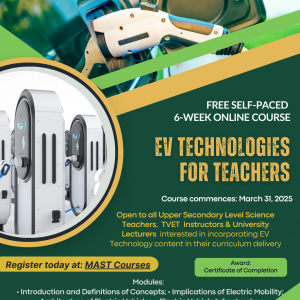
A 6-week self-paced online course: EV Technologies for Upper Secondary Level Science Teachers, TVET instructors and University Lecturers who wish to incorporate electric vehicle (EV) content in their programmes. More information can found Mona Academy of Science and Technology (MAST),. This course is offered by the University of the West Indies, Mona through the Mona Academy of Science and Technology (MAST). Click here to register: Mona Academy of Science and Technology Registration Form
.png)
Floating solar photovoltaic installations open new opportunities for scaling up solar generating capacity, especially in countries with high population density and competing uses for available land. Advantages of floating solar over land-based systems include higher energy yield, reduced evaporation, and improved water quality, among others. Combining floating solar with hydropower plants is of particular interest. Flexible hydropower output can be used to smooth the variability of the solar generation, while making better use of existing transmission assets, particularly beneficial in countries with weak grids. With a global estimated potential of 400 gigawatts, under conservative assumptions, floating solar could double the...


Although geothermal energy is globally recognized as a clean and reliable source of heat and electric power its development can inadvertently lead to adverse outcomes that disproportionately disadvantage women. Based on good practices and lessons learned, this report introduces ways that geothermal projects can mitigate risks and pursue opportunities to address gender gaps within the project cycle. It outlines the risks and opportunities associated with (i) changes in land and natural resource use, (ii) changes to employment and economic patterns, and (iii) changes to environment and health. Beyond mapping risks and opportunities, the report makes the case for focusing on...
.png)
Solar radiation is essentially a free resource available anywhere on Earth, to a greater or lesser extent. Solar PV power plants convert solar radiation into electricity. In the current era of global climate change, PV technology becomes an opportunity for countries and communities to transform or develop their energy infrastructure and step up their low-carbon energy transition. Until now, a global and harmonized assessment of country-level PV potential has not existed. This report aims to provide an aggregated and harmonized view on solar resource and PV power potential from the perspective of countries and regions, assuming a utility-scale installation of...

This technical guide is the first in a series of four technical guides on variable renewable energy (VRE) grid integration produced by the Energy Sector Management Assistance Program (ESMAP) of the World Bank and the Global Sustainable Electricity Partnership (GSEP). It provides a general overview of the intrinsic characteristics of VRE generation, mainly solar PV and wind, what the main challenges are along with some recommendations for VRE technical specifications, applicable standards, and essential testing. The main focus of the document presents a detailed outline of the essential requirements for VRE integration into the power grid. The requirements differ for...

The report, a joint effort between the World Bank’s Social Development Global Practice and International Finance Corporation (IFC) advisory services, is based on the idea that local engagement, for example, through benefit sharing, is an important way for better risk management and creating a more enabling environment for renewable energy development. It finds that the underlying causes of the conflicts are diverse, complex, and dynamic: influencing factors include historical struggles over poverty and inequality, land ownership, mistrust in public and private institutions, a lack of free, prior and informed consultations (FPIC) before investment flows into the region and oftentimes a...
.png)
The electrification of health centers, schools, and other public institutions has been limited by the slow expansion of national grids, which has staggering consequences for economic growth, poverty reduction, and the accumulation of human capital. Off-grid solar solutions have enormous potential to address the problem, both in Sub-Saharan Africa and across the world, but simply purchasing and installing the units without providing for adequate maintenance is not effective. Installing stand-alone solar units and servicing them through long-term performance-based contracts can give public institutions the electricity service they need at a cost governments can afford.

