

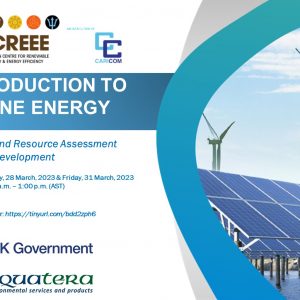
The Exclusive Economic Zones of most of the Caribbean countries are larger than their land masses, however, the energy potential of this vast resource is not being exploited. Building the capacity of stakeholders in the sector to conduct assessments, and design, implement, operate and maintain projects is a crucial steppingstone to realizing energy independence for the region. The aim of this is to build the capacity of government technocrats, utility engineers, regulators, academics, students, and project developers on design and implement marine energy projects in the Caribbean.Click to view

In the clean energy transition, the value of natural gas infrastructure is very important for operating the energy system. Gas-fired power plants contribute to optimized energy systems when they are designed to operate flexibly, responding to demand patterns and the variable supply of renewable energy. Smart electricity grids, renewable energy, battery storage technology, and gas-fired power plants in combination will generally be the lowest cost, low-carbon solution to the growing energy requirements of emerging markets. Private investors and financiers are responding to these opportunities, but the full potential will only be reached with improvements in policy, regulation, and procurement in...

The project “Regional potential assessment of novel bio energy crops in fifteen ECOWAS countries” was started by the different project partners based on the need to make an overall assessment of a series of novel potential bio energy crops which can or could be grown and processed in the future in the 15 ECOWAS countries. This project fits in a broader strategic analysis of alternative energy needs and production, the key mandate of the main funding partner in the project, ECREEE. The project partners deliberately excluded conventional “bio energy” crops like sugarcane, oil palm, maize or sunflower as target crops,...
The awareness of the risk and hazards exposed during solar PV installation is critical to maintaining a safe work environment. Safety measures should be employed in all areas of work.
.png)
This handbook seeks to raise awareness among utility managers, decision makers, and other stakeholders of the benefits of developing robust O&M strategies for all existing hydropower plants and those under development. Unlike many other forms of generation, the cost of implementing a robust O&M strategy for hydropower accounts for a relatively small percentage of the value of electricity generated. However, failure to implement adequate and sufficient O&M can result in very high costs due to increased losses of production (direct and indirect) and higher needs for rehabilitation and equipment replacement. Hence carrying out appropriate O&M strategies and related programs has...

A 6-week online course introducing lay-persons to major technological innovations underway in the mobility space, applying social science concepts to understand the social impacts of these technologies. The course can be accessed via People, Technology and the Future of Mobility The course is offered by the University of Michigan through the Coursera platform.

